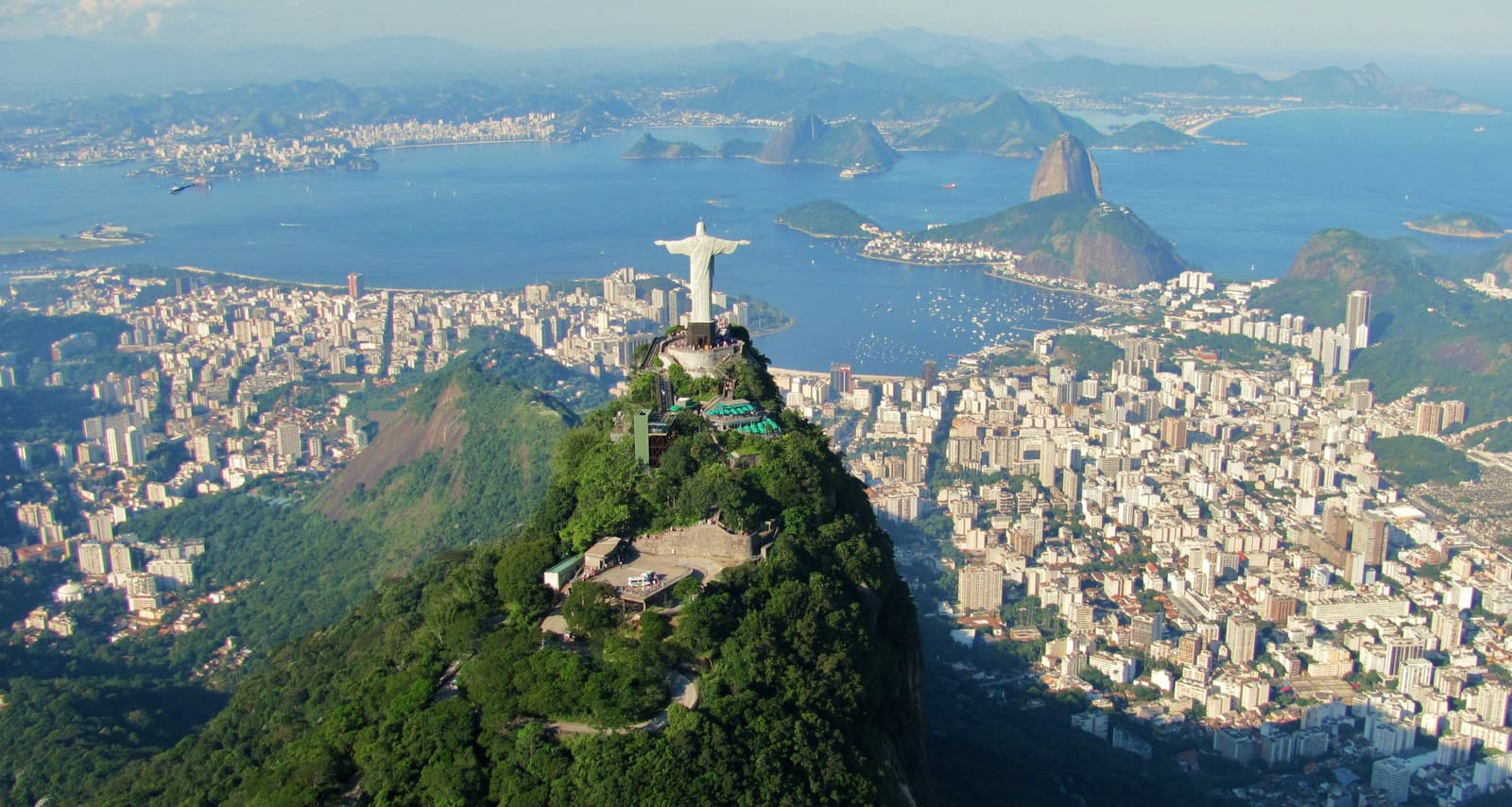
Rio de Janeiro, Rio de Janeiro, Brazil
Walking Tours in Rio de Janeiro with StreetLore
I'm 34, grew up in Lapa, and I'm the laid-back sort who prefers a samba night over a busy beach day. There's more to Rio than Copacabana.
StreetLore is an audio walking companion that narrates the lore of Rio de Janeiro as you walk or drive — origin moments, named-person episodes, era anchors, neighborhood mythology. Themes covered include history, memorial.
Popular spots covered in Rio de Janeiro
6 hand-picked stops with researched narration. Every listing below ships with a curated lore beat — the same content the app speaks while you walk past.
 01
01Christ the Redeemer
monumentChrist the Redeemer is an Art Deco statue of Jesus in Rio de Janeiro, Brazil, created by French-Polish sculptor Paul Landowski and built by Brazilian engineer Heitor da Silva Costa, in collaboration with French engineer Albert Caquot. Romanian sculptor Gheorghe Leonida sculpted the face. Constructed between 1922 and 1931, the statue is 30 metres (98 ft) high, excluding its 8-metre (26 ft) pedestal, and faces east.
 02
02Sambadrome Marquês de Sapucaí
landmarkThe Sambadrome Marquês de Sapucaí is a purpose-built parade area built for the Rio Carnival in Rio de Janeiro, Brazil. The venue is also known as Passarela Professor Darcy Ribeiro or simply the Sambódromo in Portuguese or Sambadrome in English. It is located in the downtown area of Cidade Nova in Rio de Janeiro, and is the place where samba schools parade competitively each year during the Rio Carnival.
 03
03Brazilian National Archives
landmarkThe National Archives of Brazil were created in 1838 as the Imperial Public Archives. The Archives were renamed in 1911, and are located in Rio de Janeiro. The National Archives of Brazil is the Brazilian institution responsible for the management, preservation and dissemination of federal government documents.
 04
04Santos Dumont Airport
landmarkThe Santos Dumont Airport is the second major airport serving Rio de Janeiro, Brazil. It is more of a domestic hub, with Galeão International Airport serving international flights after 2023.
 05
05Valongo Wharf
landmarkThe Valongo Wharf (Portuguese: Cais do Valongo) is an old dock located in the port area of Rio de Janeiro, between the current Coelho e Castro and Sacadura Cabral streets. Built in 1811, it was the site of landing and trading of enslaved Africans until 1831, with the blockade of Africa banning the Atlantic slave trade to Brazil.
 06
06Brazilian Academy of Letters
landmarkThe Brazilian Academy of Letters is a Brazilian literary non-profit society established at the end of the 19th century. The first president, Machado de Assis, declared its foundation on 15 December 1896, with the by-laws being passed on 28 January 1897. On 20 July 1897, the academy started its operation.
What StreetLore sounds like in Rio de Janeiro
Below: the brand voice, in the voice notes the app uses for Rio de Janeiro.
“Think of them as relaxed but insightful, with a love for hidden gems like Pedra do Sal. Not too caught up in the Rio Carnival hype. References to Flamengo vs. Fluminense rivalry are fair game, but avoid overdoing the beach stereotypes. They might mention the historic charm of Santa Teresa or the unique blend of chaos and beauty in the city. No sugarcoating or postcard-perfect descriptions.”
Ready to walk Rio de Janeiro?
StreetLore is a free download. Open it in Rio de Janeiro and start walking — the lore lands as you pass each place.