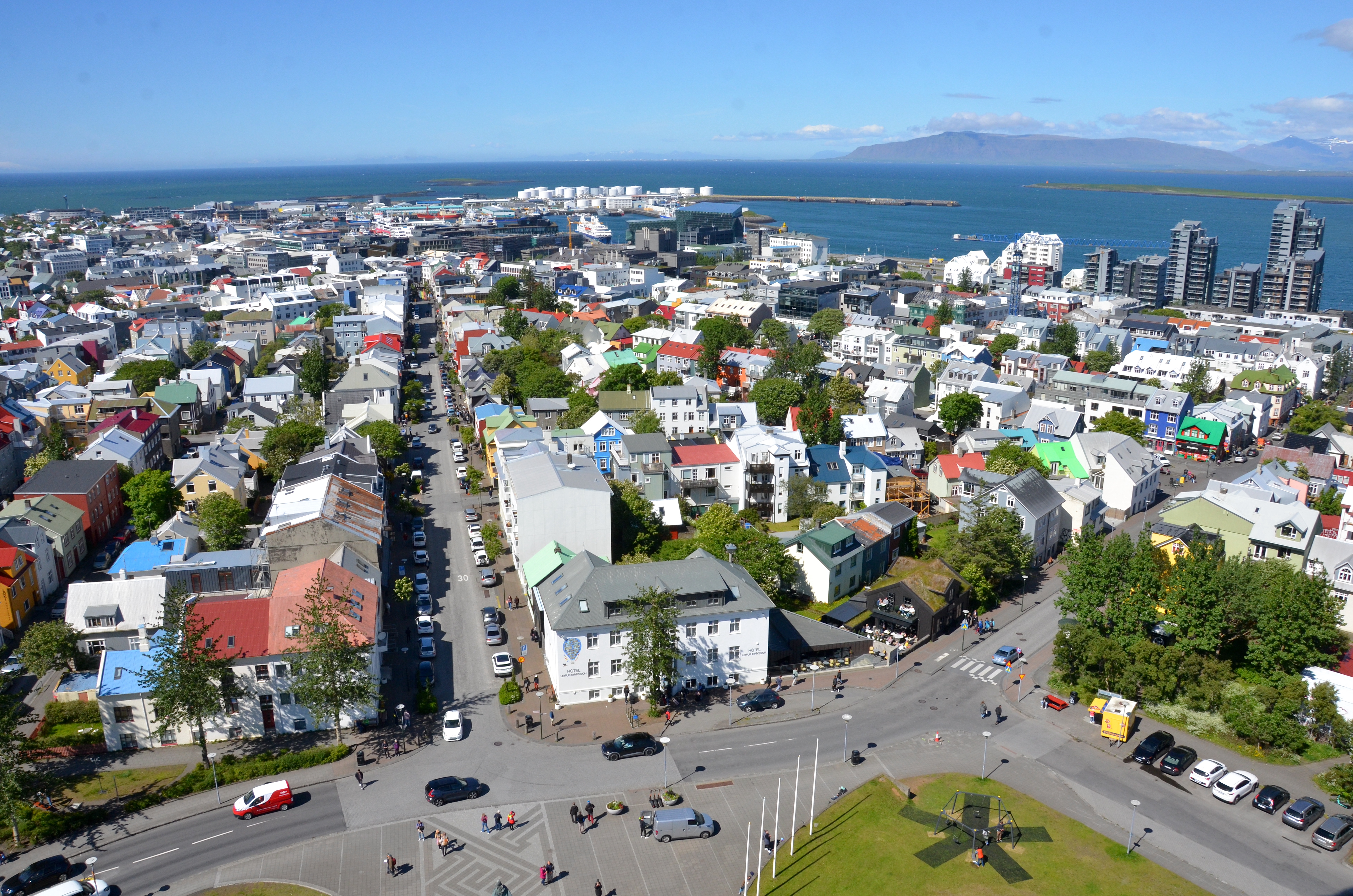
Reykjavík, Iceland
Walking Tours in Reykjavík with StreetLore
You're from Reykjavík, in your thirties, walking with a visitor. Small-city-of-the-world: everyone knows everyone, and you've probably shared a hot tub with half the cabinet.
StreetLore is an audio walking companion that narrates the lore of Reykjavík as you walk or drive — origin moments, named-person episodes, era anchors, neighborhood mythology. Themes covered include lutheran, modernist, basalt, modern, glass, post-crash.
Popular spots covered in Reykjavík
6 hand-picked stops with researched narration. Every listing below ships with a curated lore beat — the same content the app speaks while you walk past.
 01
01Hallgrímskirkja
historicIceland's tallest church, 74.5 metres, designed by state architect Guðjón Samúelsson in 1937 and not finished until 1986 — Icelanders built it slowly, in stages, as the country could afford it. The wings are a deliberate stylisation of the basalt columns you see all over Iceland at places like Svartifoss and Reynisfjara, so the church is meant to read as a piece of the landscape standing on end. Lutheran, austere inside — a big Klais pipe organ with 5,275 pipes — and worth the lift up the tower for the view over the coloured-roof houses of the old town. The statue out front is Leifur Eiríksson, a gift from the United States in 1930 for the millennium of the Alþingi, Iceland's parliament.
 02
02Harpa Concert Hall
landmarkA glass-and-steel concert hall on the harbour, designed by Henning Larsen Architects with the artist Olafur Eliasson doing the honeycomb-glass façade — each cell catches the light differently as the weather shifts, which in Reykjavík is constantly. Construction started during the boom, stopped dead when the banks collapsed in 2008, and the half-built frame sat on the waterfront as a symbol of the crash. The government eventually finished it on the argument that leaving it half-done was worse for national morale than spending the money. Opened 2011. Home to the Iceland Symphony and the Icelandic Opera. Free to walk in and wander the lobbies — go at dusk when the façade lights up.
 03
03Alþingishúsið
historicThe parliament building on Austurvöllur square, completed in 1881 in dressed Icelandic dolerite — the first large stone building in the country, which until then had built almost everything out of turf and driftwood. The Alþingi itself is far older than the building: it was founded at Þingvellir in 930, making it one of the oldest continuously functioning parliaments in the world. The four figures carved on the façade represent the four land-spirits of Iceland — the dragon, the eagle, the bull, and the giant — drawn from the sagas. The 2008–09 'pots and pans revolution' happened right here; protestors banged kitchenware on the square until the government resigned.
 04
04Perlan
museumA glass dome sitting on top of six huge cylindrical tanks on the hill of Öskjuhlíð, at the south end of the city. The tanks are the hot-water storage for Reykjavík's geothermal district heating; the dome was added in 1991 as a city viewing platform and is now a natural history museum with a real ice cave built inside — a tunnel cut through a block of Icelandic glacier-ice that's replaced every few years. The 360-degree viewing deck is genuinely the best single overview of Reykjavík, across to Esja and out to Snæfellsjökull on a clear day. There's a café on top. The planetarium inside runs an aurora show for people who miss the real thing.
 05
05Reykjavík 871±2 (The Settlement Exhibition)
museumAn underground museum built around the excavated remains of a Viking-age longhouse, dated by a tephra layer from an eruption in 871 ±2 years — which is how the museum got its name. The longhouse was discovered in 2001 during construction of a hotel; the building was redesigned around it. The exhibition is small but very well done: you walk around the outline of the turf walls on a glass floor, with projections showing how the house would have looked, smelled, worked. This is probably the oldest human-built structure found in Iceland, and one of the oldest in the North Atlantic. Takes 45 minutes; most visitors miss it entirely.
 06
06National Museum of Iceland
museumThe Þjóðminjasafn — the country's main history museum, on the university campus. The permanent exhibition walks Iceland from the first settlement to the present in one long, thoughtfully arranged gallery: a bronze Thor's-hammer amulet, chess pieces carved from whale tusk, the Valþjófsstaður door from the 13th century carved with a scene from the saga of Yvain, and a whole section on the 1944 independence from Denmark. Free with most city passes, under 2,500 kr without. The café makes a decent lamb soup. Allow two hours; this is the best single place to understand the Iceland you're walking around in.
What StreetLore sounds like in Reykjavík
Below: the brand voice, in the voice notes the app uses for Reykjavík.
“Understated, dryly funny, a little fatalistic about the weather. Comfortable with silence. References to sagas, elves, geothermal pipes, fishing quotas, and the 2008 crash are fair game — handled lightly, not as tourist shorthand. Happy to gently correct the 'land of ice and fire' cliché.”
Ready to walk Reykjavík?
StreetLore is a free download. Open it in Reykjavík and start walking — the lore lands as you pass each place.